
Quality Management
Manual Batching Error-proofing Guide: From Scan Prompts to a Closed Weighing Loop
The direct answer for manual batching error-proofing is to combine recipe version, material identity, addition sequence, live weight, tolerance and exception authorization into an execution chain that cannot be skipped at will. Scanning answers ‘Is this the right material?’ Weighing comparison answers ‘Is the quantity within the allowed range?’ Lot linkage answers ‘Can the event be traced afterward?’ All three must be designed together with material issue and return, lot changeover and exception handling. On-screen prompts alone cannot justify a claim that errors have been eliminated.
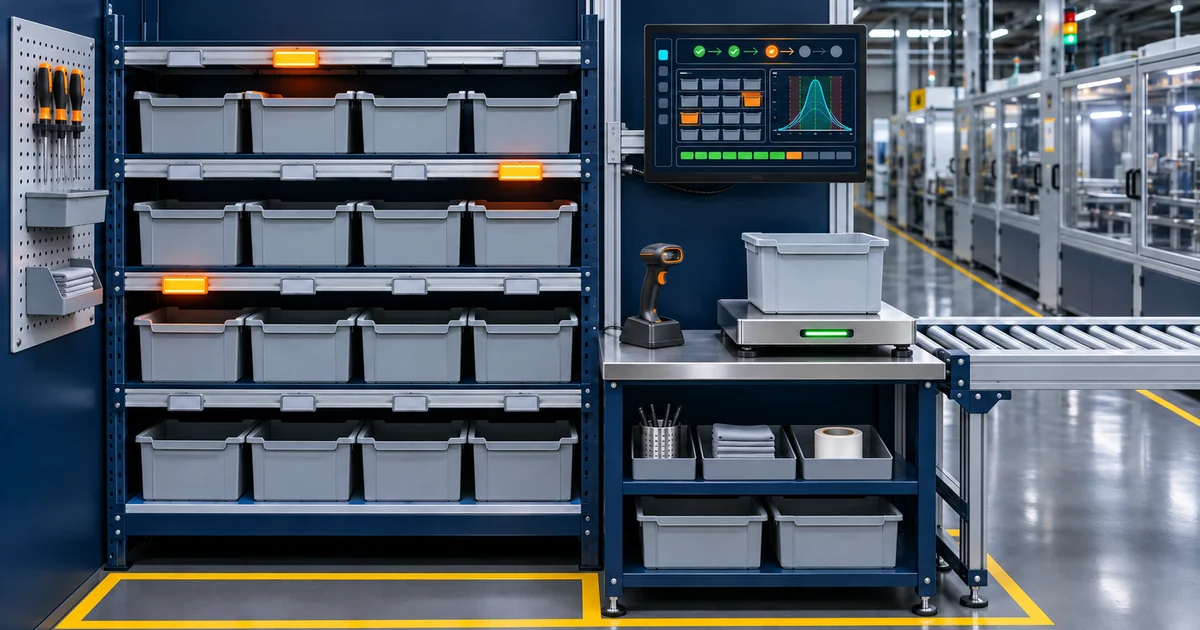
Break Batching Errors into Specific, Preventable Modes First
Batching risk is not limited to picking the wrong material. It also includes the wrong recipe version, duplicate addition, omitted addition, incorrect sequence, out-of-tolerance weighing, an unzeroed scale, unapproved material substitution and loss of lot identity. Different risks require different control points; one scan cannot cover them all.
Before designing the system, map the actual working relationships among people, materials, containers, scales and workstations. Identify which steps equipment can verify automatically and which require human confirmation. The system should reduce error risk and preserve evidence, without making unverifiable absolute promises such as ‘completely eliminating errors.’
| Error mode | Priority error-proofing point | Required data | Exception handling |
|---|---|---|---|
| Wrong material or unapproved substitute | Verify the material barcode against the recipe and substitution rules | Material, lot and recipe version | Block continuation and enter the authorization process |
| Omitted or duplicate addition | Interlock step status and completion conditions | Step, container, time and operator | Determine whether processing may continue under process rules |
| Incorrect sequence | Match the currently permitted step with the material | Recipe sequence and completed events | Prompt for the correct step and record the attempt |
| Out-of-tolerance weighing | Compare stable weight with tolerance in real time | Scale value, target, upper and lower limits, and stable flag | Prevent confirmation or process through authorization |
| Incorrect lot identity | Link material issue, return and addition lots | Source lot, target lot and quantity | Segregate objects with unclear identity and verify them |
Recipes and Tolerances Must First Become Controlled Master Data
Recipe master data should include the applicable product, version, effective interval, materials, target quantities, tolerances, step sequence and necessary operating instructions. The plant approves tolerances according to process and management requirements; a system vendor cannot invent them. Temporary adjustments also require permissions, reasons and an expiry period.
Material substitution, unit conversion and scale resolution are also part of the rules. If a recipe uses one unit while the scale outputs another, conversion and rounding must be explicit. If scale resolution cannot support the target tolerance, correct the measurement conditions first rather than allowing software to produce a false pass.
| Master-data object | Key fields | Primary confirmation | Change risk |
|---|---|---|---|
| Recipe version | Product, steps, materials, targets and effective period | Process and production roles | Continued use of an old version or a mid-run version change |
| Weighing tolerance | Upper and lower limits, unit, applicable materials and steps | Process and quality roles | Too wide loses error-proofing value; too narrow causes frequent blocking |
| Materials and substitutions | Code, lot, unit and approved substitution relationships | Material and process owners | Unapproved substitution or mixed units |
| Scale | ID, interface, resolution, calibration and location | Metrology or equipment roles | Wrong scale or mismatched precision |
| Exception authorization | Roles, conditions, time limit and disposition | Authorized plant responsibility role | Shared accounts or a long-term universal override |
The Workstation Execution Chain Must Cover Material Issue Through Return
A complete flow can begin with task or recipe confirmation, continue through workstation and scale verification, material scanning, tare or zero confirmation, stable weighing, tolerance judgment and addition confirmation, and finish with lot linkage. Material issue, replenishment and return must also retain identity; recording only the final total added is insufficient.
The operator interface should emphasize the current step, target, live weight and permitted actions, without using color as the only signal. When a scan fails, weight is unstable or tolerance is exceeded, the system should explain what can be done next instead of displaying a generic error that encourages people to bypass it and continue production.
- Task confirmation: verify product, recipe version, target lot and workstation.
- Resource confirmation: bind the scale, container, material and required operator identities.
- Step execution: scan, zero, weigh, judge and confirm in the prescribed sequence.
- Exception handling: incorrect codes, out-of-tolerance weight, disconnection and retrospective entry follow explicit processes with an audit trail.
- Closing reconciliation: reconcile additions, remaining material, returns and the target-lot relationship, then complete handover.
Stable Weight and Communication Quality Matter More Than the Number on the Screen
Instantaneous values continuously output by a scale cannot be used directly as the final weighing result. The system needs to determine stability according to scale capability and site vibration, and record the target, measured value, tolerance and confirmation time. Tare, zero and container identity should also be verified at the appropriate steps.
Whether offline continuation is allowed during a communication outage depends on downloaded tasks, caching capability and process risk. If allowed, local steps, sequence and timestamps must be retained, then transmitted and deduplicated after recovery. If these conditions are inadequate, stop the controlled steps or follow the plant-approved contingency process; records must not be reconstructed afterward without evidence.
| Data or status | Why it is needed | Common abnormality | Acceptance focus |
|---|---|---|---|
| Stable flag | Prevents judgment based on instantaneous fluctuation | Vibration, jumping readings or an unsuitable stability algorithm | Validate under different loads and shop-floor disturbances |
| Tare and zero | Distinguishes container weight from net material weight | Wrong container, no zeroing or container changed mid-step | Check step interlocks and logs |
| Scale identity | Demonstrates that an appropriate measuring resource was used | Workstation bound to the wrong scale or replacement not updated | Is the operation correctly blocked after scales are exchanged? |
| Communication quality | Distinguishes real weight from invalid data | Disconnection, duplicates, stale values and out-of-order data | Test disconnection, recovery and backfill |
| Confirmation record | Links the person, step and judgment | Automatic confirmation on a person's behalf or shared accounts | Check permissions, audit trail and accountability |
Error-proofing Records Also Provide Lot Traceability Evidence
Every material issue, weighing, addition and return should be linked through common task and lot keys. This supports backward tracing from a finished product to material lots, scales and operating history, and forward tracing from a problematic material to related production lots. Lot splitting and merging, replenishment and rework require additional relationship records.
Traceability design can support plant management and preparation of audit materials, but it does not itself confer GMP, ISO or any other certification. Certification involves a complete management system and independent audit. Public case studies should not disclose actual recipes, customer interfaces, site photographs or specific improvement figures.
- Backward query: from a target lot, view the recipe version, material lots, weights, scales and personnel.
- Forward query: from a material lot or abnormal scale, find related tasks and target lots.
- Discrepancy handling: show missing data, retrospective entries, revisions and exception authorizations rather than disguising unknowns as normal.
- Access and disclosure: control recipes and sensitive processes by role, and use only approved anonymous information externally.
Validate Error-proofing with Fault Injection and Shop-floor Pilots
Acceptance must do more than walk through the correct flow once. Deliberately test wrong material, duplicate scans, skipped steps, out-of-tolerance weight, missing zeroing, wrong container, unauthorized substitution, network loss and backfill. Each scenario must specify whether the system should block, warn or enter an authorization process.
The pilot should also observe whether excessive prompts, cumbersome steps or unstable networks encourage people to bypass the system. If error-proofing adds substantial unproductive work, improve the workstation, terminal and process rather than making operation easier by widening every tolerance or enabling a universal override.
- Prepare approved recipes, materials, scales and test lots, isolated from production data.
- Execute every normal and abnormal test case, checking prompts, interlocks, permissions and logs.
- Test network loss, restart, backfill and duplicate data to confirm there is no silent loss.
- Run forward and backward traceability drills, checking lot splits, merges and return relationships.
- Have production, process, quality, equipment and IT jointly confirm launch and contingency boundaries.
Effective Error-proofing Comes from Rules, Measurement and Identity Working Together
Manual batching error-proofing is not a single scanning function. It combines recipe versions, step interlocks, stable weighing, tolerance judgment, exception authorization and lot linkage. Any unclear rule or inadequate measurement condition can deprive an apparently complete system of practical control.
Implementation should design controls around real error modes and validate them using abnormal and disconnected scenarios while preserving usability. The system can reduce risk and provide traceability evidence, but it cannot promise complete error elimination or replace plant management systems and independent certification.
Frequently asked questions
Is material scanning alone enough to prevent batching errors?
No. Scanning primarily verifies material identity. Recipe version, step sequence, weighing tolerance, scale status and exception authorization must also be controlled; otherwise, omissions, duplicates and weight errors can still occur.
Can manual batching continue during a network outage?
It depends on process risk, whether the complete task has already been downloaded, and offline caching and identity-recording capability. The project must define the permitted scope and recovery backfill rules in advance. If conditions are inadequate, follow the approved contingency process.
May a supervisor directly release an out-of-tolerance weighing?
Whether release is allowed and who may approve it must be determined by plant process and quality rules. The system can support controlled authorization, reasons and audit records, but it should not assume every excursion can be released or provide an unrecorded universal bypass.
After batching error-proofing and traceability go live, can we claim GMP or ISO compliance?
System functionality alone does not support that conclusion. It can support defined management and traceability requirements, but compliance with a particular standard still depends on procedures, execution and audit evidence.